





Self-Pollinating Fruit Trees
54 products
We’ve been growing landscape plants since 1980. We know it’s almost impossible to achieve a 100% survival rate. That’s why we’ve got you covered!
Our Perfect Plants 1 Year Warranty is roughly 10% of your plant total. It’s a cost-effective way to guarantee your plants for a full year.
If a plant dies up to 1 year after purchase, whether it's a weather related issue, human error, or anything else, just send us a picture at customerservice@myperfectplants.com and we’ll get you a store credit for the plant you purchased. The warranty does not cover the cost of shipping for any replacement.
Warranty must be purchased at the time of checkout and cannot be added after your order has been completed.
It’s that simple! Enjoy your new plants in confidence. Guarantee your plants for a full year today!
54 products
Self-pollinating fruit trees let you grow delicious fruit without needing a second tree for cross-pollination. Whether you're working with a small backyard, a container garden, or just getting started with a home orchard, self-fertile varieties make the whole process far less complicated. We've been growing and shipping fruit trees from our North Florida nursery since 1980, and we carry a wide selection of self-fruitful options including peaches, figs, cherries, persimmons, and more.
A self-fertile fruit tree does not require pollen from a second tree to produce a crop. Pollination can happen between the male and female parts of flowers on the same tree, or even within a single flower, carried by bees, wind, or other natural means. This is different from trees that need cross-pollination, where pollen must travel from one cultivar to another. Crabapple trees, for example, are commonly used as pollinators for apple trees that cannot set fruit on their own.
Want to go deeper on the science? Read our blog post on pollination in fruit trees for a full breakdown of how it all works.
Like any other tree, self-fertile varieties flower in spring and rely on pollinators such as bees and other insects to move pollen around. The difference is that pollen transferred from one flower to another on the same tree, or even within the same flower, is enough to trigger fruit set. The fruit itself is the tree's way of dispersing seeds, so pollination needs to happen for that seed to form and the fruit to develop around it.
One important thing to keep in mind: almost all self-fertile fruit trees will produce a bigger and better crop when a compatible pollinator tree is nearby. If you don't have room for a second tree yourself, check your neighbors' yards. A suitable tree within 100 feet, the closer the better, can make a real difference in your harvest. Self-pollinating simply means you can get fruit from one tree, not that you couldn't get more from two.
Choose peach trees for reliable summer harvests, figs for containers and easy care, persimmons for fall fruit and ornamental appeal, and cherries for spring flowers and compact garden spaces.
Most varieties of peaches, apricots, nectarines, sour cherries, citrus, figs, and persimmons are self-fertile, making them excellent choices for home gardeners with limited space. If you're ever unsure whether a specific variety is self-fruitful, our customer service team is happy to help through the website or live chat. Below are some of our favorite categories and picks from the nursery.
Peaches are one of the most reliably self-fertile fruit trees you can grow, and they're a summer staple for good reason. Cold-hardy options are available for growers as far north as USDA zone 5, and the flavor of a tree-ripened peach picked at its peak is in a completely different league from anything you'll find at a grocery store. We especially love the Julyprince Peach & TexStar Peach for their exceptional sweetness and reliable productions. Many of our peach varieties are also available in semi-dwarf sizes, making them a practical choice for smaller yards.
Cherry trees are popular for both their ornamental spring blooms and their edible fruit, and self-fertile cherry varieties make them accessible to single-tree growers. The Acerola Barbados Cherry Tree is one of our standout picks. It's self-fruitful, incredibly rich in vitamin C, and produces delicate light pink flowers with a sweet fragrance. It's also well-suited to warm climates, which makes it a natural fit for gardeners in the South.
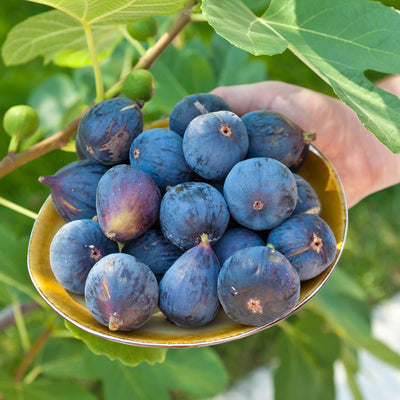
Figs are naturally self-pollinating and among the easiest fruit trees to manage in a home garden. They take well to container growing and respond well to pruning, so you can keep them at whatever size works for your space. The Celeste Fig is a staff favorite for its rich, honey-sweet flavor, and if you're looking for a compact option, the Fignomenal Fig Tree is worth a look for its naturally dwarf habit and smaller root system. True miniature fruit tree options like this one are great for patios and small-space gardens.
Persimmons ripen in October and November and bring a burst of bright orange color to the fall garden. They come in two main types: astringent varieties, which are best used in baking or dehydrating, and non-astringent (sweet) types that are excellent eaten fresh or tossed into a salad. The Fuyu Persimmon is a non-astringent variety we grow and highly recommend for home orchards. Hachiya is the most popular astringent variety!
Yes, the vast majority of peach tree varieties are self-pollinating. You can get a solid crop from a single peach tree, though planting two compatible varieties nearby will typically increase your yield. This makes peaches one of the most beginner-friendly fruit trees for small yards.
Most apple trees are not self-fertile and do better with a compatible pollinator nearby. However, some self-fertile apple varieties do exist. If a self-pollinating apple tree is what you're after, check the individual variety descriptions or reach out to our team, and we can point you toward the right options from what we carry.
Some plum trees are self-fertile and some are not. European plum varieties tend to be more self-fruitful than Japanese types. Always verify before you plant if you're relying on a single tree for fruit production. Give us a call and we'd be happy to help you!
Most pear trees benefit from cross-pollination and will produce more fruit with a second tree nearby. That said, some self-fertile pear varieties do exist and can produce a crop on their own. Can pear trees self pollinate? Yes, certain ones can, but results are generally better with a pollinator partner within range. Check individual variety details or ask our team if you need guidance on self-fertile pear options.
Sour cherry varieties are typically self-fertile, while most sweet cherries require a second tree for cross-pollination. If you want a self-pollinating cherry tree for a smaller garden, sour or tart cherry types and specialty varieties like the Acerola Barbados Cherry are your best bets.
We've been growing fruit trees at our North Florida nursery since 1980, and every tree we ship is grown and inspected by our team before it leaves the property. We offer a worry-free shipping guarantee, and our selection includes both standard and semi-dwarf fruit trees to suit a range of garden sizes. Whether you're looking for dwarf fruit trees for a patio container or a full-size specimen for an established orchard, we carry options across the board. Shop the full collection of fruit and nut trees or browse the self-fertile selections above to find the right fit for your space.